
The Cost of Nodding Along
We’ve all been there. You’re on a call, and your brain has a few “blank spots” that don’t quite click. Your manager asks, “Any questions?” and even though you’re slightly confused, you stay silent. You nod and say, “I’m good, thank you”.
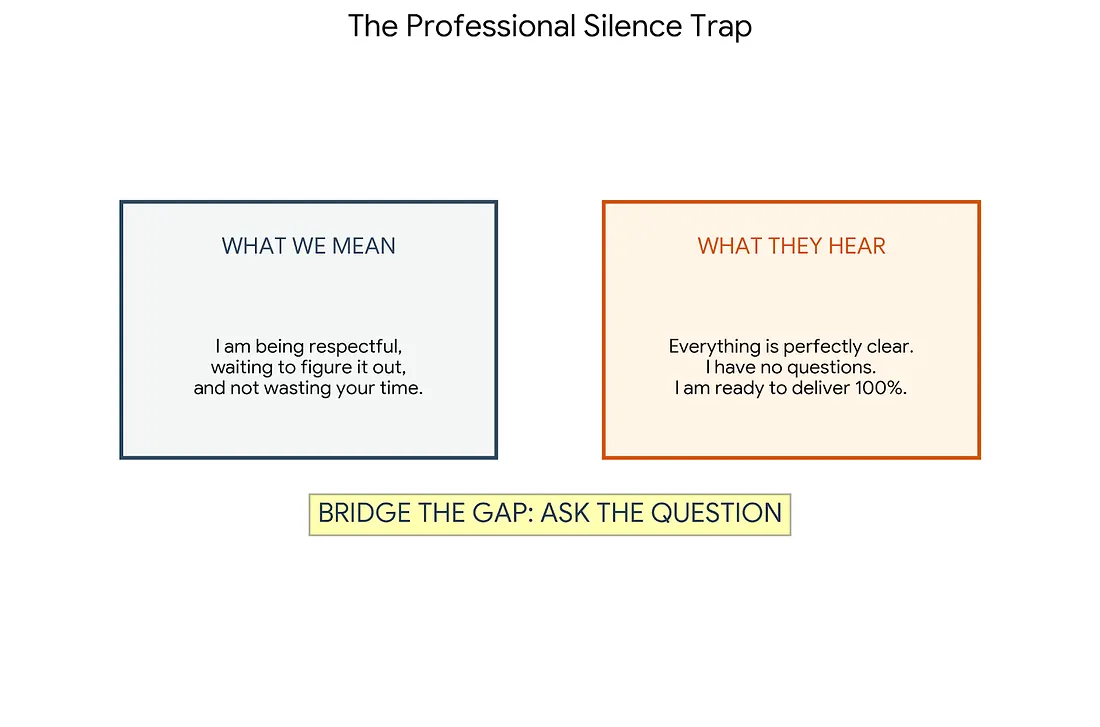
In your mind, you are being the perfect professional. You aren’t being “difficult,” you aren’t wasting time, and you’re showing you can figure things out. But there’s a cultural glitch happening here that can actually hurt your progress.
The “Respect” Misunderstanding
For many of us raised in cultures that value hierarchy (High-Context cultures), silence is a sign of high intelligence and deep respect. We are taught to “read between the lines”. Asking for clarification can feel like we’re admitting we aren’t sharp enough, or challenging the person in charge.
But in a global, fast-paced workplace, the rules are different.
Silence doesn’t mean respect — it means agreement.
If you don’t ask a question, they assume you have a 100% clear map of the project. When that silence leads to an underdelivered result, they don’t see a “polite” employee. They see a gap in Social Intelligence.
Building the “Asking Muscle”
Moving past this isn’t about changing who you are. It’s about learning to “translate” your need for clarity into professional language. Here are three ways to ask questions while keeping your dignity intact:
- The “Double-Check” Approach: Instead of saying “I don’t get it,” say: “I want to make sure I’m 100% aligned with your vision. My understanding is [X] — does that match what you’re looking for?”.
- The “Nuance” Frame: Use the word “nuance.” “I’ve got the main idea, but I’d love to understand the nuance of how you want this handled.”.
- The “Think-Time” Strategy: If you’re too nervous on the spot, say: “I’m processing the details now. I’ll send over any clarifying questions once I’ve mapped out the first steps.”.
We have to stop protecting our image at the expense of our impact. In the global workplace, the person who asks the most clarifying questions is seen as the most engaged and reliable. Asking isn’t a sign that you are “dull”; it’s a sign that you care too much to let the project fail because of a misunderstanding.
Let’s start viewing clarity as the highest form of respect.